


سبد خرید شما خالی است.



The best way to dry saffron to preserve color and aroma
October 21, 2025
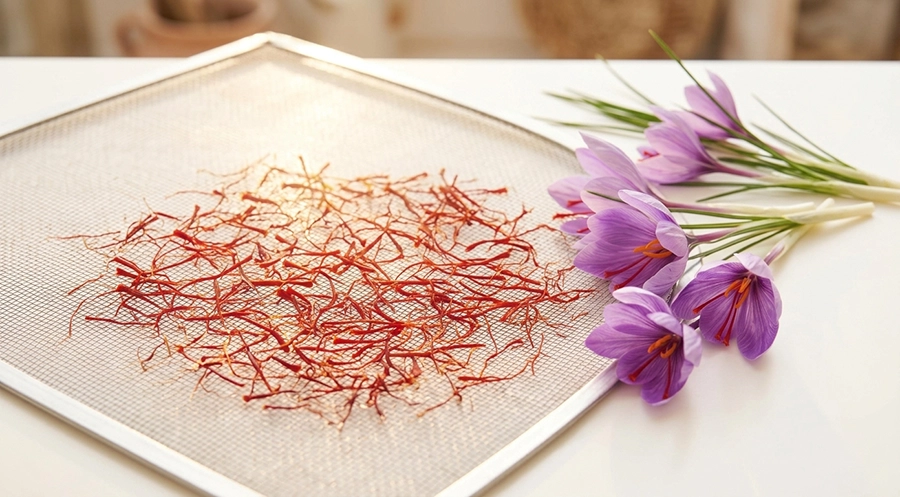
Saffron is a precious and authentic Iranian spice that has a special place in cooking and pharmaceuticals due to its golden color, penetrating aroma and unique taste. Since saffron threads are very sensitive to humidity, light and temperature, the processDrying saffronIt has a decisive role in maintaining its final quality.
If saffron is not dried properly, its effective compounds arecrocin (coloring agent),Picrocrocin (flavor agent)andSafranal(perfume agent)It is destroyed and the economic and therapeutic value of the product decreases. In this article, we will review the most comprehensive and scientific methods of drying saffron at home and industrially so that you can get the best results from your product.
Why is drying saffron so important?
Drying is the last and most sensitive step after harvesting saffron. In fact, the quality of dried saffron determines the price of your product in the domestic or export market. Improper drying process can cause evaporation of aromatic compounds, discoloration of strands and even mold.
On the other hand, basic drying stabilizes the aroma and color and increases the shelf life of saffron for several years. One of the most important reasons for paying attention to the method of drying saffron is to prevent the growth of microorganisms and maintain the health of saffron.
Therefore, getting to know different methods and choosing the right method can make the difference between ordinary saffron and premium saffron.
The best methods of drying saffron
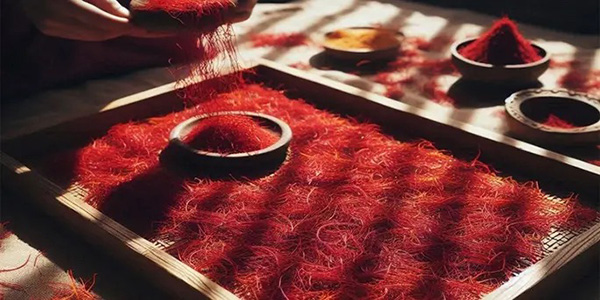
The methods of drying saffron are very diverse and each has its own advantages and limitations.
1. Traditional method
In the traditional method of drying saffron, after being separated from the flower, the stigmas are placed on a clean cloth or paper and left in a dry, dark environment (light lowers the color quality of saffron) and with proper ventilation for several days to lose their moisture. This method does not require special equipment and its cost is very low, but it is difficult to control the temperature and humidity conditions. If the ambient temperature is too high or too low, saffron may change color or become moldy. To avoid this problem, it is better to do it in an environment with a temperature of about 30 to 40 degrees.
2. Ironing or pressing method
In this method, the goal is to produce smooth and shiny saffron (specially Nagin or Super Nagin saffron). Saffron stigmas are placed between two thin metal plates or two cotton cloths and dried with gentle pressure and controlled heat. This method makes the saffron strands remain without bending and have a more luxurious appearance. Of course, it should be noted that high pressure or temperature over 70 degrees causes saffron to become brittle or lose its aroma. Percy method is often used for export purposes or luxury packaging and requires high precision and experience.
3. Drying saffron with an oven
In this method, saffron is spread in special metal trays with uniform thickness and placed in the oven (industrial or home oven). The suitable temperature for this work is between 50 and 65 degrees Celsius. This method reduces the drying time to about 15 to 20 minutes and at the same time preserves the color and aroma of saffron. One of the advantages of this method is high speed and uniformity of drying. But if the temperature is set incorrectly, it is possible to burn or reduce the aroma. Therefore, it is better to use an accurate thermometer and timer to guarantee the final quality of saffron.
4. Drying saffron with microwave
One of the fastest and easiest home methods for drying saffron is using a microwave. For this, saffrons are spread on a clean paper and placed in a microwave with medium power (about 700 watts) for 7 minutes. This method dries saffron in a short time and preserves its color and aroma to a great extent. The advantages of this method are high speed and hygiene, but care must be taken that high temperature does not cause burns or darkening of the strands. This method is more suitable for home use or drying small quantities.
5. Drying saffron with a household electric dryer
Household electric dryers for fruits and vegetables are one of the best options for drying high-quality saffron. These devices have temperature and humidity control and prevent saffron from burning or mold. Just spread the saffron stigmas on the floors of the machine and set the temperature between 45 and 65 degrees. In about 30 to 60 minutes, saffron will dry completely. This method is very safe from the point of view of health and preserves the aromatic and colored compounds of saffron. The only drawback is the initial cost of purchasing the device.
6. Drying saffron in the Spanish way
The Spanish method is one of the most accurate methods of drying saffron, which is a combination of indirect heat and proper ventilation. In this method, saffron is poured on a metal sieve and placed at a distance from a heat source (such as a heater). At the same time, a flow of cool air such as a cooler or fan is used for ventilation to remove excess moisture quickly. This process prevents mold and preserves the natural color of saffron. The Spanish method requires high precision and if it is implemented correctly, saffron with export quality will be produced.
7. Freezing method
Freeze drying of saffron is one of the most modern and scientific industrial techniques. In this method, saffron is first frozen at a very low temperature (about minus 20 degrees Celsius). Then, in the vacuum environment, the temperature is slowly increased so that the frozen water turns directly into steam. This process is done without contact with direct heat and as a result, the color, aroma and chemical properties of saffron are completely preserved. The freezing method is expensive and time-consuming, but it is considered the best choice for producing export-quality saffron with a long shelf life.
8. Drying saffron with a solar dryer
In this method, solar energy is used indirectly. The solar drying machine has several floors on which saffron is spread on its trays. Sunlight is absorbed through the transparent plates and converted into heat, and the air circulates inside the device. This warm and mild air flow causes saffron to dry evenly without damaging its aromatic compounds. This method is environmentally friendly and economical, but it depends on weather conditions and has a weaker performance on cloudy or humid days and is more suitable for sunny areas.
9. Drying saffron with a tunnel dryer
The tunnel dryer is an advanced industrial system that reduces the humidity of saffron in a short period of time with controlled hot air flow. In this method, saffrons are placed in special trays inside the tunnel and hot air passes through them. The temperature of this air is usually set between 50 and 70 degrees. This method has a high speed, prevents environmental pollution and is suitable for mass production. Of course, the cost of buying and maintaining the device is high and it needs electricity or industrial gas. The final result is uniform and export quality saffron.
10. Drying saffron in a tray
In this simple method, saffron is spread in metal or stainless steel trays and placed in a warm environment with proper ventilation. To prevent contamination, the saffron is covered with a clean cotton cloth. Depending on the environment, the drying process takes between 12 and 24 hours. This method is suitable for medium volume of saffron, and by observing hygiene and temperature control, it can create a good quality. Low cost and simplicity are its most important advantages.
11. Drying saffron on the stove
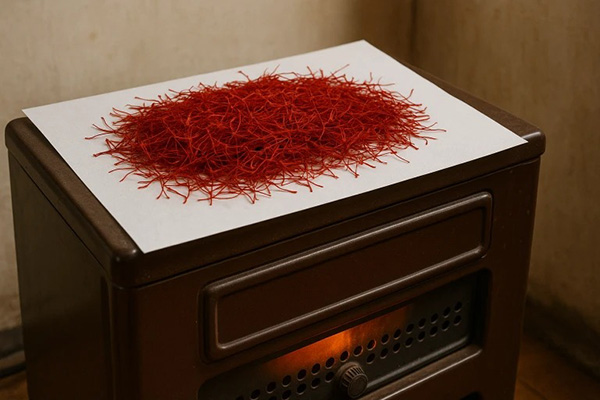
One of the oldest ways to dry saffron at home is using a heater. Just put some sheets of A4 paper on the heater and spread the saffron threads on it. The heater should be set to the lowest flame to create gentle heat. In this method, saffron will be completely dry within a few hours. The important thing is that the distance between the saffron and the heat source is not too high so that the temperature remains uniform. The advantage of this method is simplicity and no need for special equipment; But the risk of burns and discoloration is high.
12. Drying saffron in the sun
In this traditional method, saffron is spread on a clean white cloth and exposed to direct sunlight. Sunlight causes the natural evaporation of saffron moisture. This method is free and requires no tools, but must be done in a dust-free environment. Also, the weather conditions should be dry and without humidity so that saffron does not get moldy. High heat or prolonged direct sunlight can reduce the color and aroma of saffron, so it is better to do it in moderate hours of the day.
Comparison of saffron drying methods
| Drying method | brief explanation | benefits | Disadvantages | suitable for |
|---|---|---|---|---|
| traditional (sun) | Spreading saffron in direct sunlight | Low cost, no device required | The possibility of contamination depends on the weather | Farmers of dry areas |
| Traditional (Bukhari) | Putting saffron on the paper above the heater | Simple and fast | Risk of burns or discoloration | home use |
| Microwave | Dry in 5-7 minutes | Fast and without contamination | Suitable only for small volume | Home use |
| Iron or iron | Pressing saffron between metal plates or devices | smooth and beautiful appearance (supercolor) | High skill required | Exported saffron |
| oven or oven | Drying with uniform heat at 70°C | Maintaining color and aroma, suitable speed | More power consumption | Small workshops |
| Household electric dryer | The device has temperature and humidity control | Full preservation of properties, safe | High initial cost | Home producers |
| spanish | Combination of heating and ventilation with fan or cooler | Mold control | High experience required | Traditional workshops |
| frozen | Freezing at sub-zero temperatures | Full preservation of aromatic compounds | Expensive and time consuming | Exported saffron |
| solar | Sun drying in multi-layer machines | Use of clean energy | Requires sunny conditions | Hot and dry areas |
| a tunnel | Passing hot air through saffron | High speed and uniform quality | Need for industrial equipment | Large workshops |
| tray | Spreading saffron in metal trays in a warm room | Low cost, simple | Strict temperature control | Drying small quantities |
| on the stove | Putting saffron on paper on low flame | Easy and fast | Risk of saffron burns | home use |
| with the sun | Natural drying in the open environment | Natural and without devices | Depending on the weather and the possibility of pollution | Villages and small farms |
Important points in drying saffron
- Never wash fresh saffron; Because it causes the loss of its aroma and color.
- The temperature given to saffron should not exceed 70 degrees Celsius.
- Saffron should be dried in a well-ventilated environment without direct light.
- To maintain quality, store dried saffron in a dark glass container in a dry place.
- one ofThe best ways to store saffronTo increase shelf life, mechanized methods or dryers are equipped with hygrometers.
- If the intentionBuy saffronYou have the quality, always pay attention to the reliable brand and its drying method, because the quality of drying directly affects the color, aroma and taste.
summary
Finally,The best way to dry saffronIt is a method that can maintain the quality of its effective compounds in the shortest time and with precise control of temperature and humidity. Traditional methods are suitable for small quantities and home consumption, but for the production of export quality saffron, the use of electric or tunnel dryers is recommended.
Proper drying not only preserves the golden color and pleasant aroma of saffron, but also multiplies its economic value. By choosing the right method and following specialized tips, you can produce premium saffron and with proper storage, you can have a long-lasting and fragrant product.
Frequently asked questions
1. What is the best way to dry saffron at home?
Using a microwave or household electric dryer is the best option; Fast, hygienic and with full quality maintenance.
2. Can saffron be dried in the sun?
Yes, but it should be done in a clean environment away from dust, but there is a possibility of color change.
3. How long does it take to dry saffron?
It varies between 10 and 20 minutes in mechanized methods and between 1 and 3 days in traditional methods.
4. How to prevent saffron from getting moldy?
Saffron should be dried in an environment with less than 50% humidity and constant temperature.
5. Does the type of drying affect the color of saffron?
Yes, improper heat control can cause the reduction of crocin and thus the loss of saffron color.
Share this article
 |
|

Similar articles

Appointment of Sahar Zekaiyan as Technical Manager of Food and Drug Organization Sample
با افتخار اعلام میکنیم سرکار خانم سحر ذکائیان، مسئول فنی شرکت زعفران مصطفوی مهر ایرانیان، در سال ۱۴۰۴ به عنوان مسئول فنی نمونه سازمان غذا و دارو انتخاب شدند. این...
2026/06/30
Selection of Mostafavi Saffron Mehr Iranian Company as the Exemplary Production Unit of the Food and Drug Administration
با افتخار اعلام میکنیم شرکت زعفران مصطفوی مهر ایرانیان در سال ۱۴۰۴ موفق به کسب عنوان واحد تولیدی نمونه سازمان غذا و دارو شد. این دستاورد ارزشمند نتیجه تلاش مستمر...
2026/06/30

Selection of Mostafavi Saffron Mehr Iranian Company as the Exemplary Standard Production Unit
شرکت زعفران مصطفوی مهر ایرانیان با افتخار اعلام میکند که در سال ۱۴۰۴ به عنوان واحد تولیدی نمونه استاندارد انتخاب شده است. این موفقیت، حاصل تلاش مداوم، پایبندی به استانداردهای...
2026/06/30
Selection of Sahar Zokaian as the National Exemplary Quality Control Manager in the Year 2025
با افتخار اعلام میکنیم سرکار خانم سحر ذکائیان، مدیر کنترل کیفیت شرکت زعفران مصطفوی، در سال ۱۴۰۴ به عنوان مدیر کنترل کیفیت نمونه کشوری انتخاب شدند. این موفقیت ارزشمند نشاندهنده...
2026/06/30
Guide to Growing Barberry in Pots and Maintenance Conditions
زرشک، به عنوان یکی از ارزشمندترین محصولات کشاورزی ایران و سوغات شناختهشده مشهدالرضا، جایگاه ویژهای در سبد غذایی خانوادههای ایرانی دارد. این گیاه علاوه بر کاربرد گسترده در آشپزی ایرانی...
2026/01/05
Why Is Saffron the Most Expensive Spice in the World?
زعفران که به طلای سرخ شهرت دارد، گرانترین ادویه جهان است و این جایگاه را بهدلایل متعددی به دست آورده است. این ادویه ارزشمند نهتنها در آشپزی، بلکه در صنایع...
2025/12/24
What Is Saffron\\\'s Picrocrocin?
زعفران یکی از پیچیدهترین گیاهان دارویی جهان است که ارزش آن تنها به رنگ و عطر محدود نمیشود، بلکه طعم خاص و منحصر به فرد آن نیز اهمیت بالایی دارد....
2025/12/17
What Is Saffron\\\\\\\'s Safranal?
زعفران یکی از ارزشمندترین گیاهان دارویی جهان است که شهرت آن تنها به رنگ و طعم محدود نمیشود، بلکه عطر منحصربهفرد آن نیز نقش مهمی در تمایز این ادویه دارد....
2025/12/15